Exploring Task-Specific Machine Learning Applications in AI Agent Development
TL;DR
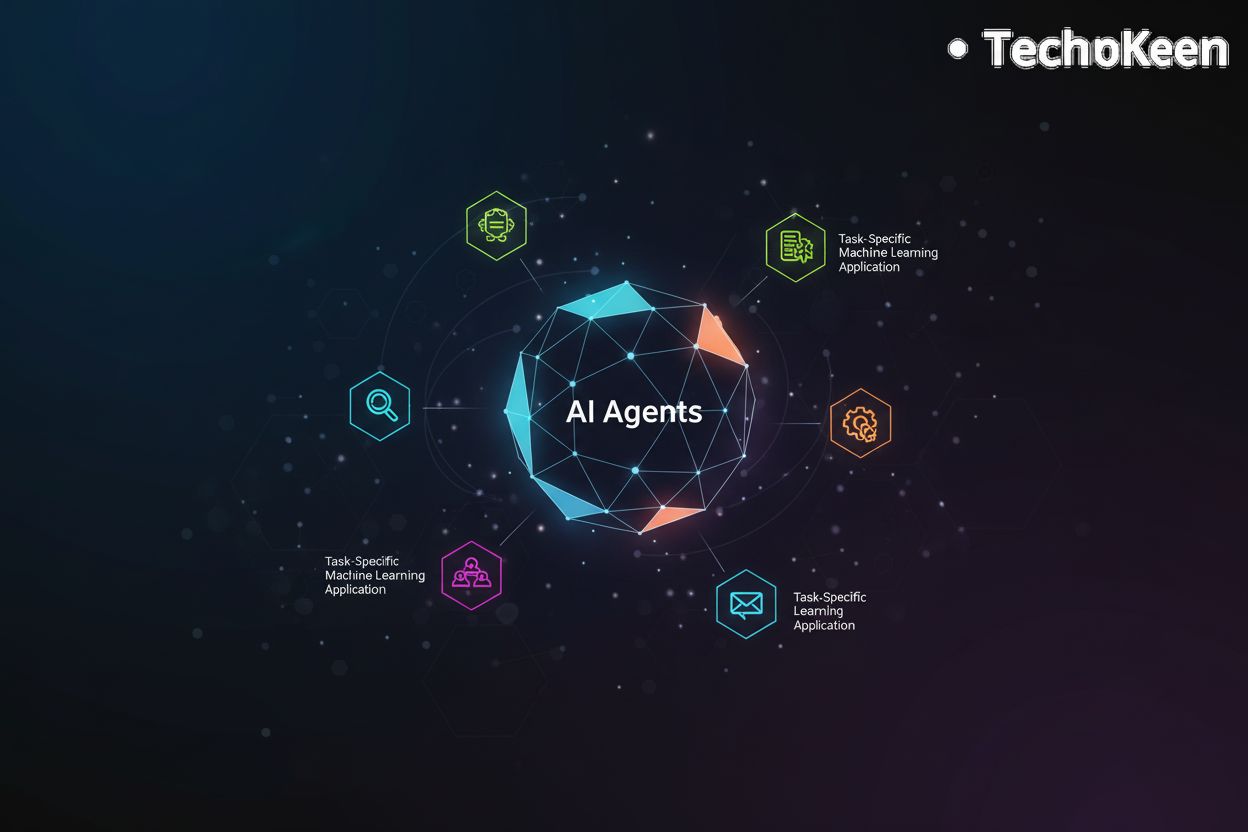
- This article covers how task-specific machine learning tools and the Model Context Protocol (MCP) are changing how agents solve complex business problems. It explores moving beyond basic web browsing to using 18,000+ specialized api tools for better automation. You'll learn about building agents that actually work in enterprise settings while keeping security and governance in mind.
The death of generic blogging and the rise of the specialist
Ever wonder why your LinkedIn feed feels like a graveyard of identical "5 tips for success" posts? It’s because everyone is using the same basic prompts, and honestly, we’re all getting a bit bored of the ai fluff.
The internet is currently drowning in "good enough" content. If you’re a healthcare consultant or a retail strategist, posting surface-level advice isn't just lazy—it’s actually hurting your reputation. People can smell a generic chatgpt response from a mile away now.
- The "Fluff" Factor: ai tends to play it safe, leading to repetitive advice that lacks any real-world "teeth" or contrarian views.
- Niche Nuance: In specialized fields like finance or legal compliance, missing a single detail because your prompt was too broad can lead to straight-up misinformation. ((Why) Is Misinformation a Problem? - PMC - NIH)
- Search Engine Shifts: Google and other engines are getting way better at spotting low-effort, automated junk. According to the Google March 2024 Core Update, the goal is to reduce unhelpful, unoriginal content by 40%, hitting sites that pump out generic pages just for clicks.
So, how do we fix this? We move toward semantic engineering. This isn't just a fancy word; it's about building a web of meaning. Practically, you do this by using schema markup to tell search engines exactly what your entities are, building internal links that connect related concepts rather than just random pages, and doing "entity-based" keyword research where you map out how a person, a tool, and a result all connect in the real world.
For educators, this means moving away from "what is algebra" to "how algebraic logic applies to modern api rate-limiting." See the difference? One is a dictionary definition; the other is a specialist's insight.

We gotta start thinking about entities—the people, places, and specific concepts—and how they relate. If you're a teacher, you don't just want to rank for "lesson plans." You want to be the person who explains "inclusive pedagogy in remote stem environments."
How to build a topical authority map
If you want to actually build one of these "semantic maps" everyone talks about, you can't just guess. Here is the 5-step process to actually get it done:
- Identify your Core Entity: Pick your main pillar. If you’re in retail, it might be "Inventory Management."
- Branch into LSI Keywords: Use tools like AnswerThePublic or even google's "People Also Ask" to find the 10 most common questions around that pillar.
- Map the User Intent: Group these questions by whether the person wants to buy something, learn something, or just find a specific tool.
- Create the "Spiderweb" Link Strategy: Every sub-topic article must link back to the pillar, and the pillar must link to every sub-topic. This tells the ai crawlers that you own the whole subject.
- Audit for Gaps: Look at your competitors. If they have a section on "api integrations for retail" and you don't, your map is broken.
Next, we’re gonna look at how to take these maps and use advanced paraphrasing so your writing actually sounds like a human wrote it.
Engineering authenticity in your daily writing workflow
Ever sat back after hitting "generate" on a prompt and thought, man, this sounds exactly like a robot wrote it? You aren't alone, and honestly, your readers—especially those picky compliance teams—can feel it too.
Building a workflow that actually feels human isn't just about changing a few words; it's about engineering authenticity from the ground up. If you're an educator or a publisher, you need tools that help you see where the "ai-ness" is leaking through so you can plug the holes.
I’ve been playing around with gpt0.app lately because it’s a super straightforward way to audit your drafts for free. It gives you a "human score" that actually makes sense.
- Spotting the patterns: ai loves certain sentence structures—like starting every paragraph with "Moreover" or "In addition." This tool highlights those bits so you can rewrite them in your own voice.
- Tone check for teachers: If you’re making educational resources, you don't want to sound like a textbook from 1995. You want to sound like a mentor.
- Compliance wins: For those in finance or legal, being able to prove a human actually reviewed and "touched" the content is becoming a huge deal for origin tracking.

According to a 2023 report by Originality.ai, detectors are becoming essential for publishers to maintain brand integrity as generative tech floods the market. It's not about being "anti-ai," it's about being pro-authenticity.
Next, we're gonna look at how to actually build these "semantic maps" so your content doesn't just sound human—it actually covers the topics your audience is searching for.
Advanced paraphrasing techniques for niche authority
Ever feel like you're just playing a high-stakes game of "find and replace" with ai drafts? Honestly, if you just swap "utilize" for "use," you aren't fooling anyone—especially not the experts in your niche.
Real authority comes from the stuff an llm literally can't know: your specific mistakes, that one weird client call, or how a retail floor actually feels on a Black Friday. Paraphrasing isn't about hiding the robot; it's about burying it under a mountain of your own "lived experience."
- The Anecdote Injection: If the ai says "telehealth improves patient outcomes," you rewrite it to "I saw a clinic in rural Ohio cut wait times by 20% just by switching their intake api." That specific detail is your "proof of human."
- Fixing the "Robot Polish": llms love to sound perfectly balanced. Real experts have opinions. Don't be afraid to say something is "overrated" or "a total nightmare to implement."
- The Jargon Flip: ai uses generic industry terms. You should use the "slang" your peers use. Instead of "financial irregularities," maybe you call it "leaky buckets" in a budget review.
According to a report by Poynter, local newsrooms found that while ai can summarize data, it completely misses the "community heartbeat" that makes a story resonate with actual neighbors.

I remember trying to explain a complex tax loophole to a friend. The ai version was technically right but boring as hell. Once I compared it to "trying to fit a couch through a door that's too small," it clicked. That's what we're going for here.
Education is a primary example of a field where scaling requires this balance of ai efficiency and human soul, because students need more than just facts—they need a connection.
Scaling educational resources without losing the soul
So, you've got a pile of ai-generated lesson plans and study guides. It feels efficient, right? But then you read them and—ugh—it’s like eating unseasoned tofu. Useful, sure, but nobody's asking for seconds.
Scaling education shouldn't mean turning your classroom into a factory. If you're a teacher or a publisher, the goal is to use these tools to handle the "grunt work" while you keep the actual Spark of learning alive.
- The 80/20 Rule for Modules: Let the ai handle the 80% (structure, basic definitions, formatting). You spend your energy on the 20% that matters—the "why this is cool" part.
- Consistent Voice: Use a custom "Style Guide" prompt. Tell the api to write like a "friendly but firm high school soccer coach" or a "curious scientist." It stops the tone from jumping around between units.
- Student-Facing Transparency: If students use ai for research, teach them to cite the prompt. It’s about being honest about the "co-pilot" relationship.

Fact checking is basically the most important job in 2024. I once saw an ai hallucinate a whole historical era because the prompt was too vague. Don't let that be your lesson plan.
- Structure your api calls: Instead of asking for a "history of Rome," ask for "key events of the Punic Wars with citations from verified academic databases." It forces the bot to stay on the rails.
- The Human-in-the-Loop: Never publish a module without a manual "sanity check." I like to have a peer or a student-assistant read it for "vibes" and accuracy.
- Feedback loops: If a student finds a mistake in an ai-assisted guide, that’s a teaching moment. Use it to show how these models can be confidently wrong.
We’re moving toward a world where the "editor" is more valuable than the "writer." It’s about curation, not just creation.
Next, we’re gonna wrap this all up by looking at how to measure the actual impact of this semantic content—because if it isn't moving the needle, what's the point?
Future proofing your digital strategy
So, what happens when the ai hype finally dies down and we're left with a web full of robot-written noise? Honestly, the "winners" won't be the ones who used the fastest api, but the ones who actually own their niche.
Future-proofing isn't about fighting the tech—it's about building a moat that a bot can't swim across.
- Community is your Moat: Whether you're in healthcare or retail, your proprietary data and "boots on the ground" insights are worth more than a billion tokens.
- Niche Authority as Defense: As mentioned earlier regarding search engine shifts, being a specialist is your only protection against being buried by generic automation.
- Human-Centric ethics: We gotta be transparent. If you use ai to draft a finance report or a lesson plan, own it, but make sure your "human fingerprint" is all over the final version.

Measuring the Impact
If you're doing this right, you need to track the right kpis. Don't just look at raw traffic; look at:
- Time on Page: If people are actually reading your "humanized" stories, this number will skyrocket compared to the 30-second bounce rate of generic ai fluff.
- E-E-A-T Scores: Use tools to see if your site is being recognized as an authority in your specific niche by search engines.
- Conversion Rates: Are people actually signing up for your newsletter or buying your course? Real humans convert; bots just scroll.
The goal is to use ai for the heavy lifting so you have more time to be, well, human. Stay curious, keep it messy, and don't lose your soul to the prompt box.